Power Strip Guide & Comparison 2026

Power Strips: Safety, Protection and the Right Choice
Power strips are an essential part of modern households, offices and workshops. Where a single wall socket used to be enough, today computers, monitors, routers, televisions, chargers and kitchen appliances often need to be powered at the same time. The power strip plays a central role in power distribution. Nevertheless, the topic is often underestimated. Differences in quality, load capacity and safety features can be significant – and in the worst case may lead to overload or fire hazards. When choosing a power strip, it is therefore important not to focus solely on the number of sockets. Safety features, maximum power capacity, build quality and the intended area of use are crucial. This guide explains what really matters and how to avoid potential risks.
Which Power Strip Is the Right One?
The right power strip strongly depends on where it will be used. In a home office, several electronic devices with relatively low power consumption are usually connected. In the kitchen, however, appliances with high wattage are often used. Requirements also differ significantly in gaming environments or workshops.
A key factor is maximum load capacity. Typical household power strips are rated for 16 amps. With a mains voltage of 230 volts, this results in a maximum power output of approximately 3,500 watts. This limit must not be exceeded. It is important to add up the power consumption of all connected devices. While a laptop, monitor and router together often stay below 500 watts, a kettle or heater alone can reach 2,000 watts or more.
In addition to load capacity, material quality also plays an important role. High-quality power strips feature sturdy housings, well-finished contacts and properly dimensioned cables. A cable cross-section of at least 1.5 mm² is recommended for higher loads. Thin cables can heat up more quickly when carrying high current.
You should also look for recognized certification marks such as VDE, GS or TÜV. These markings confirm that the product has been safety tested and complies with applicable standards.
Which Power Strip Is Safe?
Safety is the most important criterion when buying a power strip. A low-quality power strip can overheat when overloaded. The resulting heat may cause plastic parts to melt or even ignite. Very cheap products without visible certification or manufacturer information are particularly critical.
A safe power strip includes integrated protection mechanisms. These include:
- Overload protection with automatic shut-off
- Increased touch protection, especially for households with children
Overload protection interrupts the power supply if the maximum load is exceeded. This prevents cables and contacts from heating up dangerously. Touch protection ensures that live components cannot be accessed unintentionally.
The way a power strip is used also greatly affects safety. Power strips should not be operated permanently under carpets or squeezed behind furniture. Heat buildup can shorten their lifespan and increase risks. Likewise, connecting several multi-socket extensions in series should be avoided. This so-called cascading increases contact resistance and can significantly raise the load on individual cables.
Power Strip with Surge Protection – Useful or Necessary?
One of the most common questions concerns surge protection. Many consumers wonder what this feature actually means and whether it is truly necessary. Surge protection protects connected devices from sudden voltage spikes. These fluctuations can be caused by indirect lightning strikes, switching operations in the power grid or large appliances within the same circuit. The integrated protection circuit reacts within fractions of a second and diverts excess energy before sensitive electronics are damaged.
A power strip with surge protection is particularly useful for:
- Computers and office workstations
- Televisions and home theater systems
- Gaming setups with high-end hardware
- Network devices such as routers or NAS systems
However, expectations should be realistic. A power strip does not replace a full external lightning protection system for buildings. In the case of a direct lightning strike, a comprehensive lightning protection system is required. For everyday voltage fluctuations, however, a strip with integrated protection provides a sensible additional safety measure.
What Does the Watt Limit Mean for a Power Strip?
The watt limit is a crucial safety factor. It describes the maximum total power that may pass through the power strip. In households, this value is typically around 3,500 watts. If this limit is exceeded, the electrical current in the cable increases, which can cause the material to heat up.
Many users underestimate the power consumption of individual devices. A kettle or fan heater can quickly reach 2,000 watts. If several such devices are used at the same time, the load limit may be exceeded. The risk lies not in the number of sockets but in the total connected power. A common misconception is that a power strip with six sockets is automatically suitable for six high-power devices. In reality, such strips are primarily intended for devices with moderate power consumption, such as consumer electronics or office equipment.
How Many Devices Can Be Connected to a Power Strip?
This question cannot be answered universally because the number of devices is secondary. What matters is their combined power consumption. Several smaller devices such as laptops, monitors, printers and routers usually do not pose a problem.
Problems arise when devices with high heating power are combined. Large appliances such as washing machines, dryers or dishwashers should ideally be connected directly to a wall outlet. In the kitchen, it is also advisable not to run multiple high-power appliances simultaneously on a single strip.
Another topic is operating refrigerators via a power strip. Technically this is possible if the strip is high quality and properly rated. Nevertheless, many experts recommend connecting larger household appliances directly to a wall outlet to avoid additional contact points.
Power Strip for Office, Gaming or Kitchen
Requirements vary significantly depending on the area of use. In offices, several electronic devices usually run simultaneously. Here, solid build quality, sufficient sockets and ideally integrated surge protection are recommended. A central switch can help reduce standby consumption and disconnect devices completely from the mains outside working hours.
In gaming environments, sensitive components such as graphics cards, monitors and consoles are used. Voltage fluctuations can cause costly damage. A high-quality power strip with protective features provides additional safety and ensures a stable power supply.
In the kitchen, load capacity is particularly important. Appliances with high power consumption are often used here. A robust power strip with a heat-resistant housing and a sufficiently thick cable is essential. At the same time, care should be taken not to run several heating appliances simultaneously on one strip.
Can a Power Strip Help Save Electricity?
Power strips with an integrated switch can help save electricity. Many electronic devices continue to consume energy in standby mode. By switching them off completely, this consumption can be reduced.
Especially with office or entertainment electronics, standby consumption adds up over the course of a year. A switchable power strip allows several devices to be disconnected from the power supply at the same time without unplugging each device individually. This not only saves energy but can also extend the lifespan of certain devices.
Common Mistakes When Using Power Strips
A common mistake is connecting several power strips together. This increases the load on individual cables, and contact resistance can generate additional heat.
Damaged or outdated models should also not be used. Visible discoloration, loose sockets or damaged cables are clear warning signs.
Special requirements apply in humid environments. Only power strips designed for such conditions and with the appropriate protection rating should be used.
|
Model |
Application |
Features |
Recommendation |
|
Connect Line (with USB A & C) |
Home office, living room |
USB-A & USB-C, modern design |
Best all-round solution 2026 |
|
Office, workstation |
Robust aluminum housing |
Very durable & stable |
|
|
Workshop, construction site |
High load capacity, rugged construction |
For professional use |
|
|
Household, TV unit |
Great value for money, optional surge protection |
Ideal for everyday use |
|
|
Server, IT rack |
19-inch mounting, professional power distribution |
For technical environments |
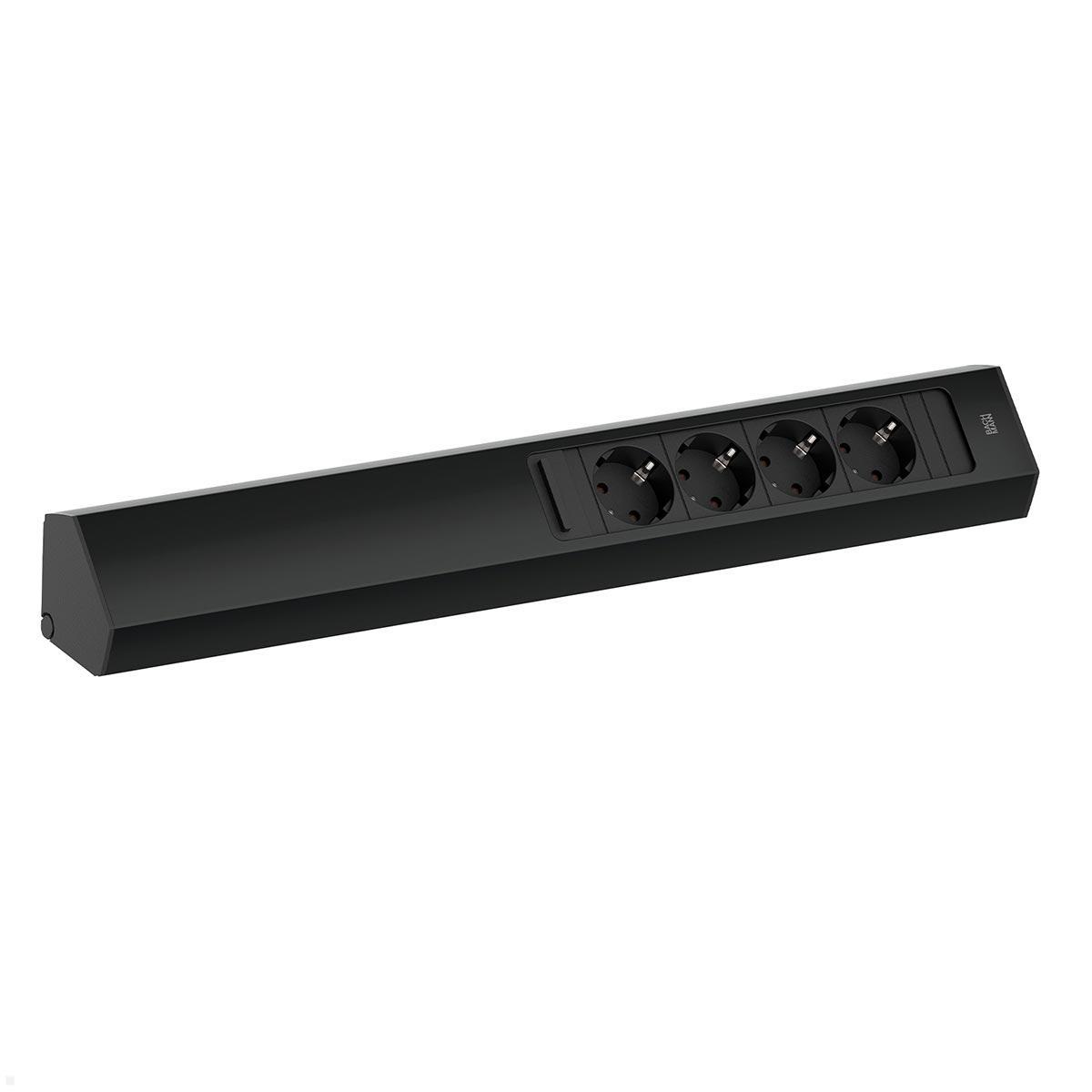
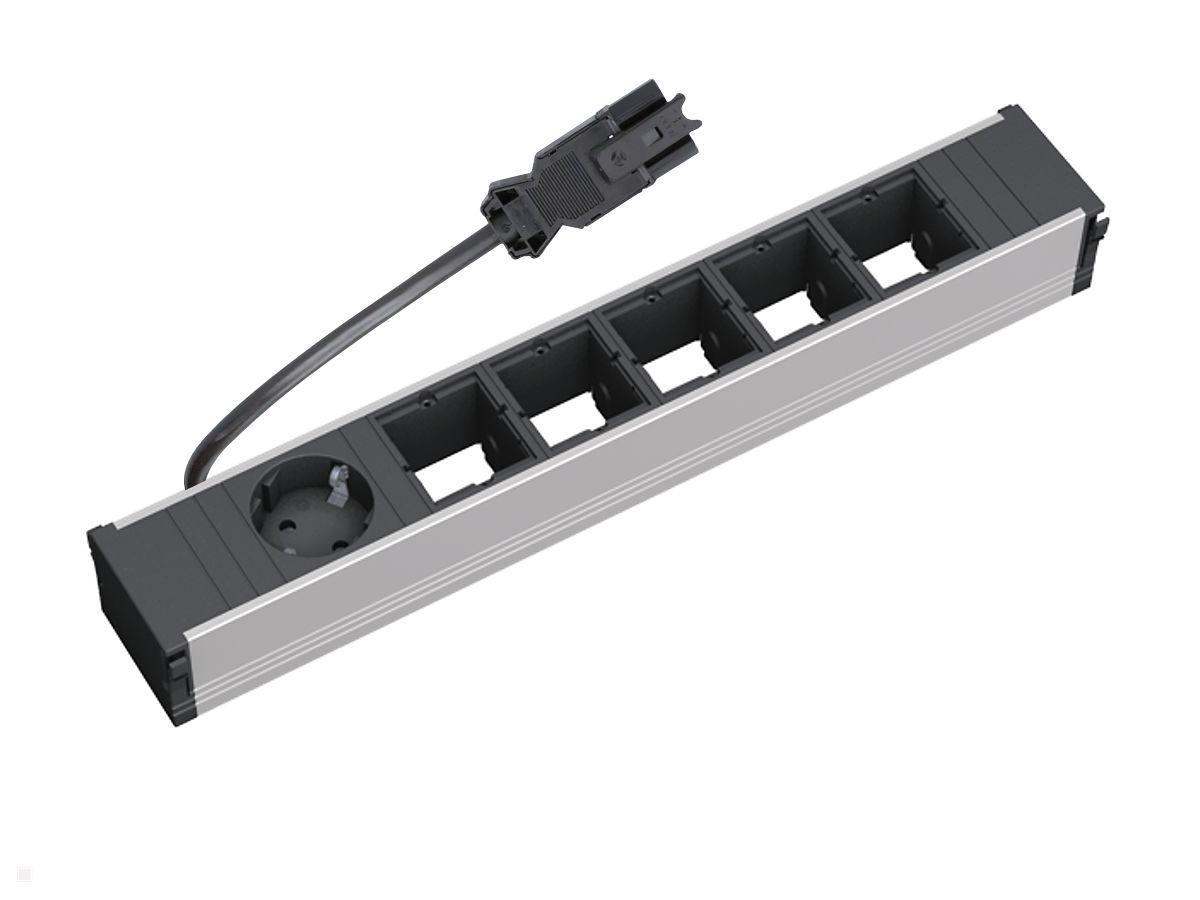
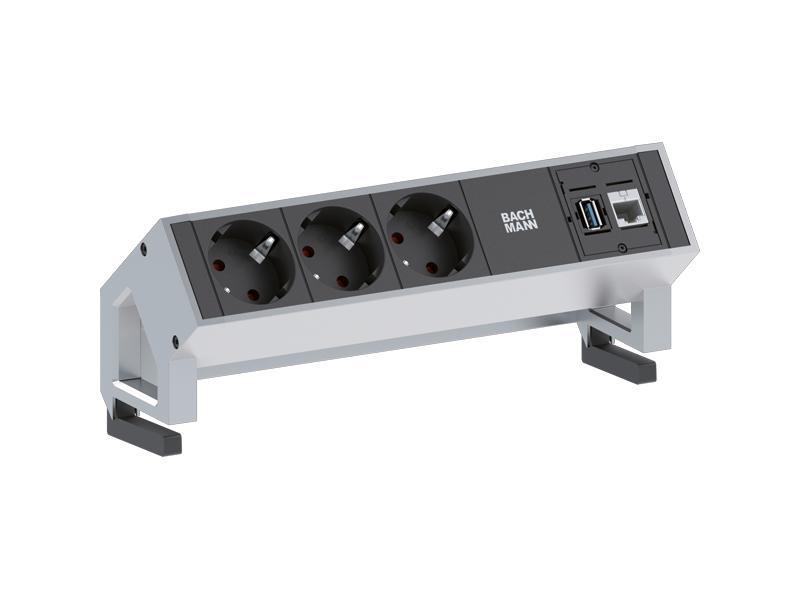
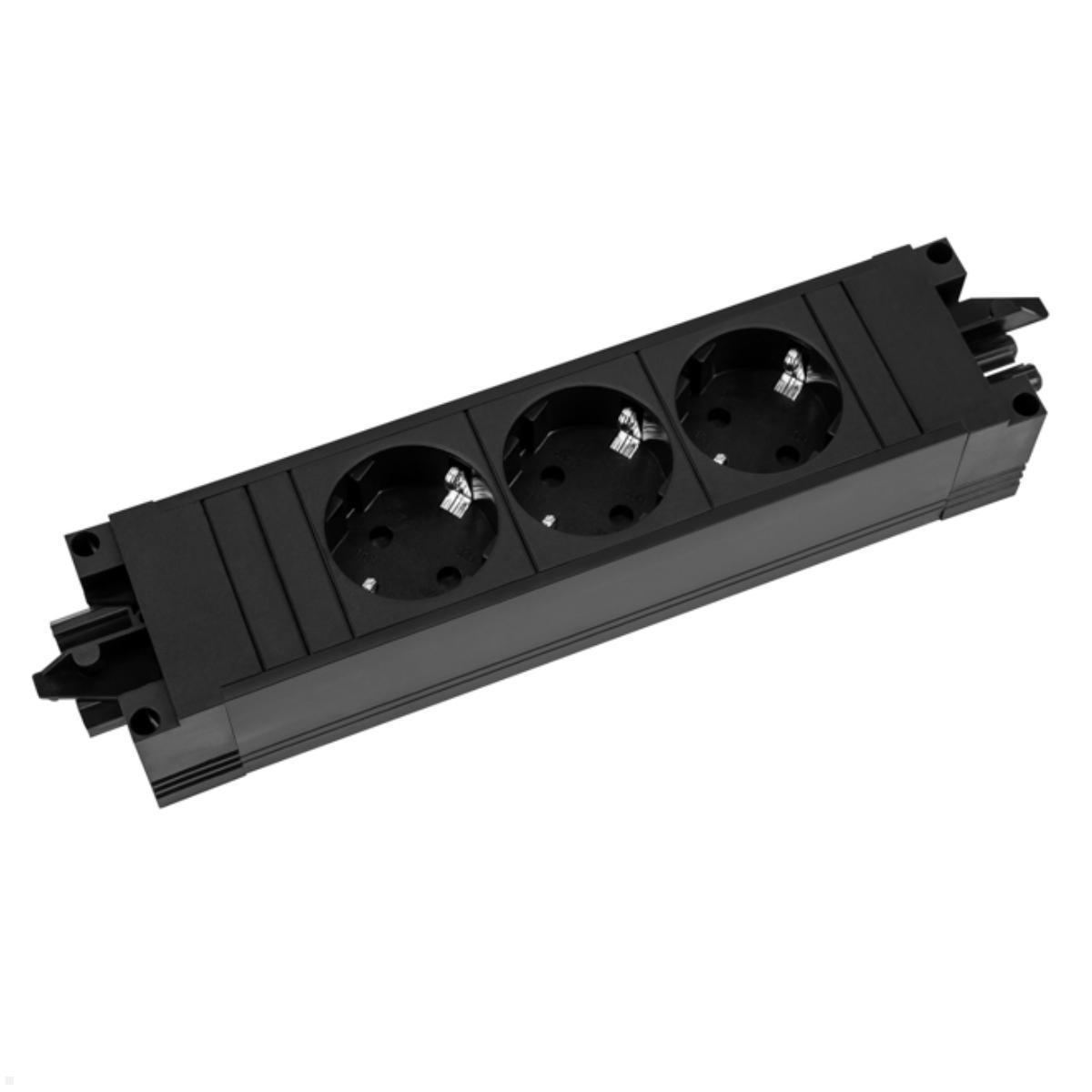
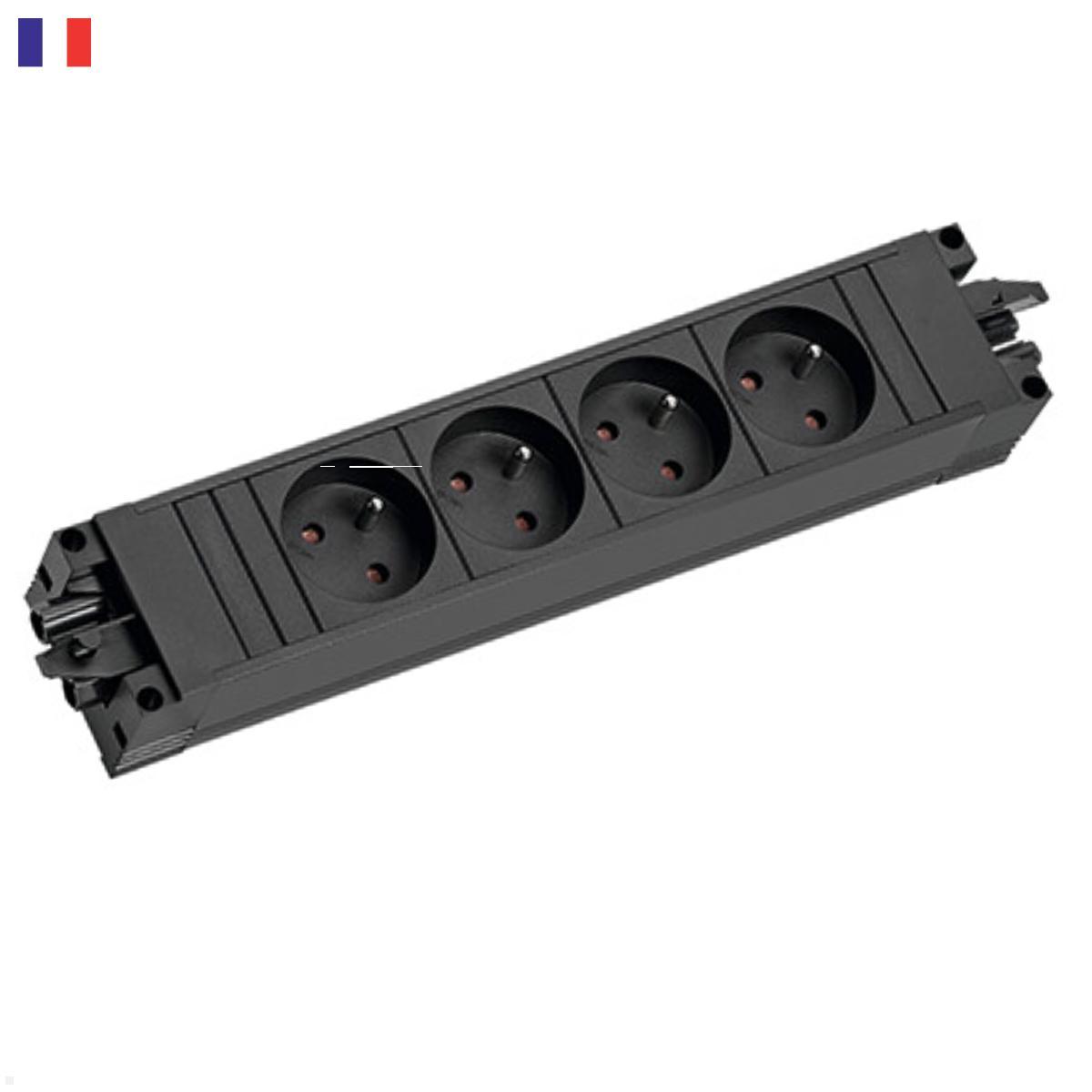
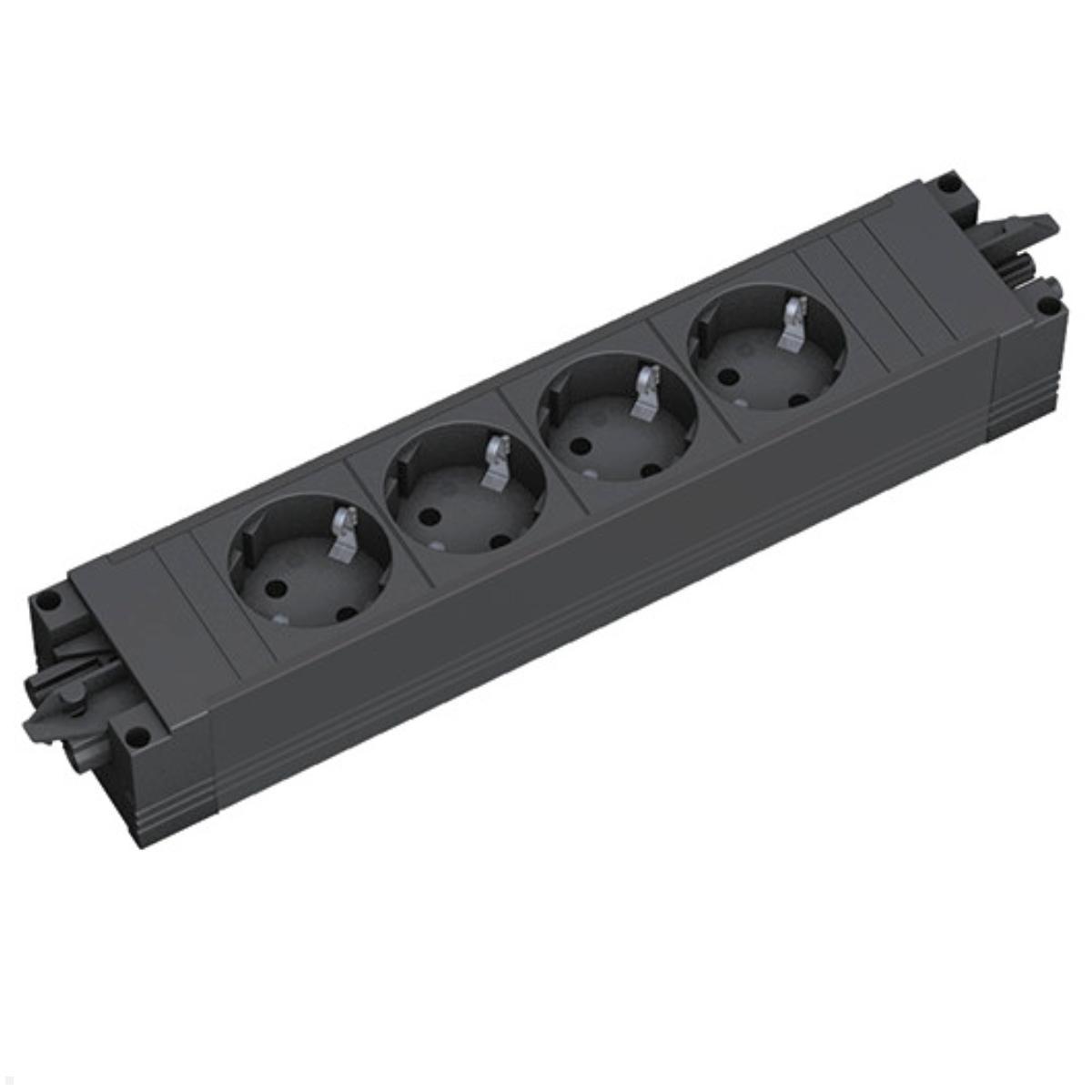
Among the current bestsellers in the Bachmann24 online shop are the modular STEP BASE power strips 906.18819 and 906.18818 from the STEP series, which stand out due to their flexibility and easy integration. The 4-socket version 906.18819 provides four Schuko sockets and is ideal for mounting under tabletops, in cable ducts or partition walls – perfect for flexible workstations and office installations. The 3-socket version 906.18818 is also highly popular. It features three Schuko sockets rotated by 35°, allowing convenient connection even for wider plugs and easy integration into modular STEP systems. Both models use the standardized Wieland GST18i3 connector system, which enables flexible connection and expansion options and makes these power strips robust, versatile solutions for offices, home offices and similar environments.